Build · Ongoing
How the drawings are meant to be used
A-size PDFs, DXF cutting files, and eDrawings — organized the way a shop actually works.
Brian Carpenter · Rainbow Aviation
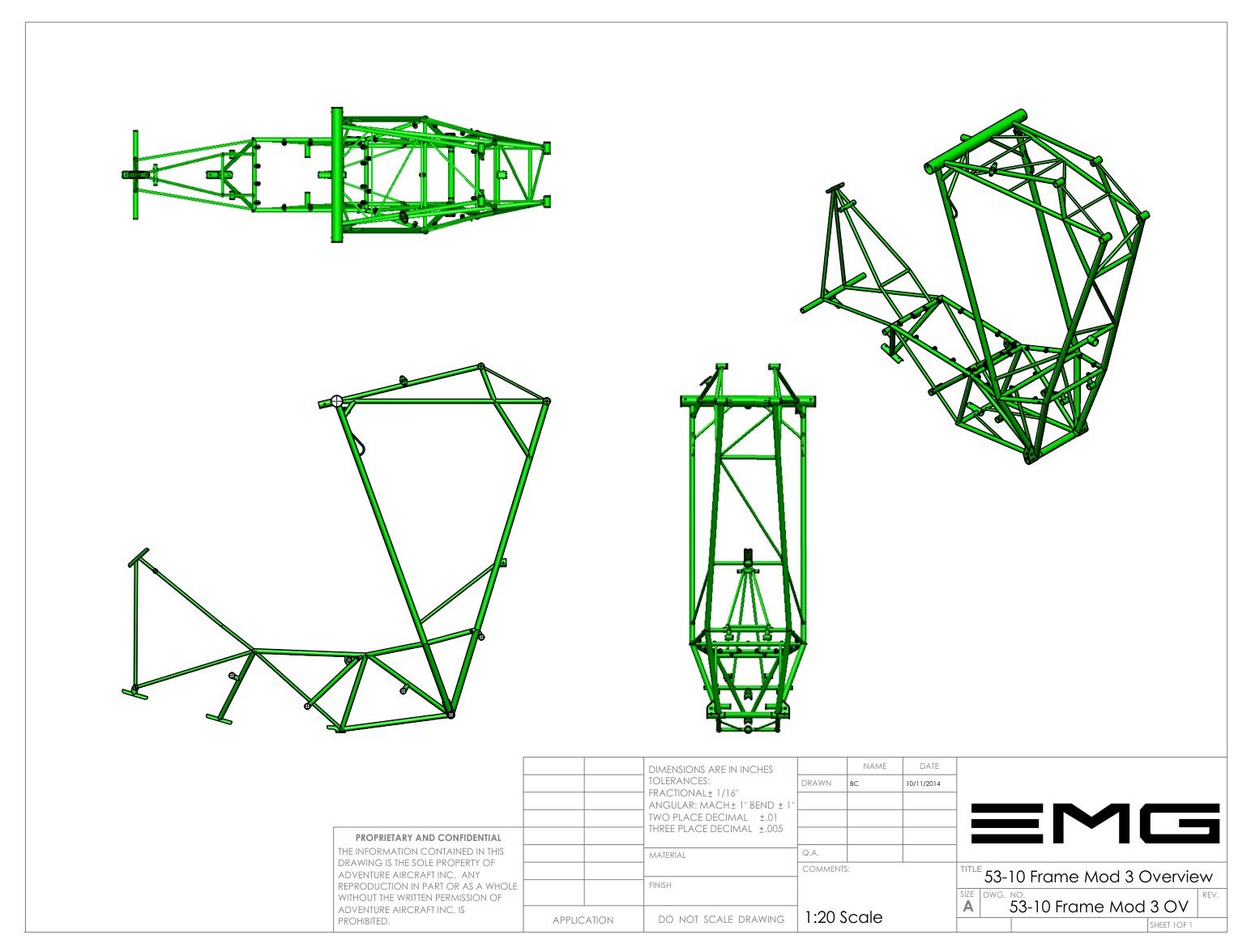
The drawing set is organized the way a shop actually works. PDF drawings are A-size so they print on a home printer or sit on a tablet at the bench. Full-size templates glue directly to material. Tube-marking guides are drawn to the same format.
The chapters follow a modified ATA / JASC code. 53 is the fuselage. 53-20 is the boom. 53-20-52 is bulkhead number two. Part numbers are built from that code, so a drawing, a DXF, and a piece of tubing all point at the same place.
DXF files drive cutting jigs. eDrawings let you rotate an assembly, section it, touch a part, and get the number. That is how you learn a welded cluster before you light a torch — not from a single exploded view on a poster.
CNC is required for some components. Materials that used to come from Quicksilver are not all available. Air-Tech and the usual ultralight suppliers fill some of the gaps. This is a homebuilder project.
Start with the Google Drive folder. Download what you need.